Turn your passion for helping others into your career. At Adelphi University’s School of Social Work, we live our mission of social justice.
Adelphi’s School of Social Work is:
- a top-ranked school offering undergraduate, master’s and doctoral degrees with an outstanding education that is both affordable and accessible.
- a highly diverse community of students and faculty members who value social justice, equity, inclusion and a sense of belonging in everything we do.
- a school dedicated to helping you afford your education. We offer scholarships of up to $20,000 to help save on tuition.
- a dedicated partner to many local organizations across the state of New York.
- a school with a distinguished 70-year history, located in five convenient locations around New York—Garden City, Brooklyn, Poughkeepsie and Middletown in the Hudson Valley, and Hauppauge in Suffolk County.
Top-Rated Programs
BSW and Minors
Choose an undergraduate major or minor in social work, and find unique benefits at Adelphi: small classes, hands-on learning in real-world community settings, valuable internship experiences in the New York area. Plus, you can save on tuition with a generous scholarship as high as $18,000 annually.
BSW & MinorsANSWER BSW Program
Prefer to go to school in the evenings? Adelphi’s convenient ANSWER BSW program may work best for you. Students in our ANSWER program work during the day, and many are earning their BSW to change careers. You may be eligible for 10 work/life credits. You will learn in small classes taught by our world-class faculty.
ANSWER Program (BSW)Master of Social Work
With five locations in New York state and options for full or part time, online or in person, this program gives you exceptional flexibility. Cost is a top priority, with scholarship awards as high as $20,000 a year. Concentrations in mental health, substance abuse, trauma and other critical areas are offered.
MSW ProgramOnline Master of Social Work
If you would like to earn your master's in social work but are working or raising a family, this is an excellent solution. You will benefit from online flexibility and a personalized approach to learning. Plus, Adelphi is affiliated with more than 1,000 human service agencies throughout New York for nearby placements.
Online MSWPhD in Social Work
Become a social work leader by earning your doctorate with our highly regarded program. You will be prepared to serve in social service organizations, teach in colleges or engage in social research. You will save on tuition with substantial new doctoral social work scholarships of up to $16,600.
Doctorate in Social WorkPostgraduate Certificate
Earn a Postgraduate Bilingual School Social Work certificate and help bilingual students and their families overcome language and culture barriers. You will earn New York state certification in bilingual school social work, giving you an affordable and accessible pathway to career advancement.
Advanced Study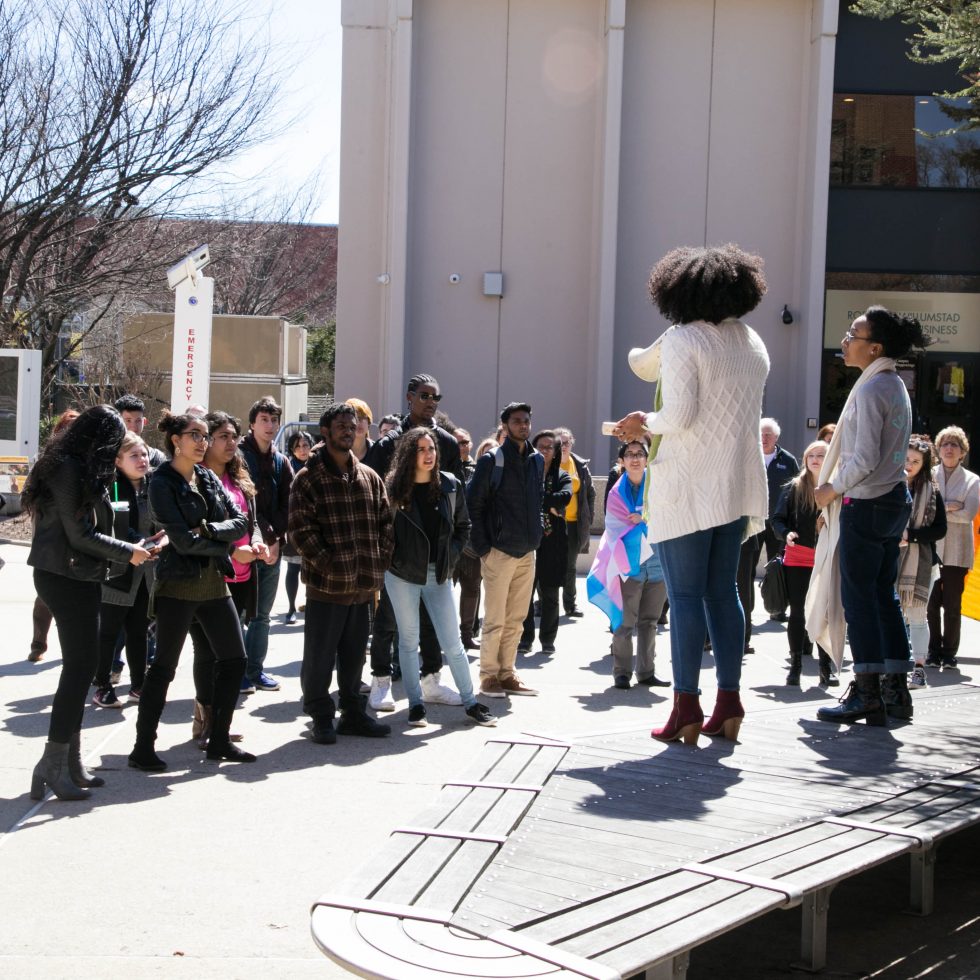
The School-Wide Social Action Initiative
Each spring, our Social Action Initiative helps prepare undergraduate and graduate students for their role as advocates for social change, engaging them in projects like Being Anti-Racist, Racism and Criminal Justice, and #StopAsianHate. Social action is integral to social work education.
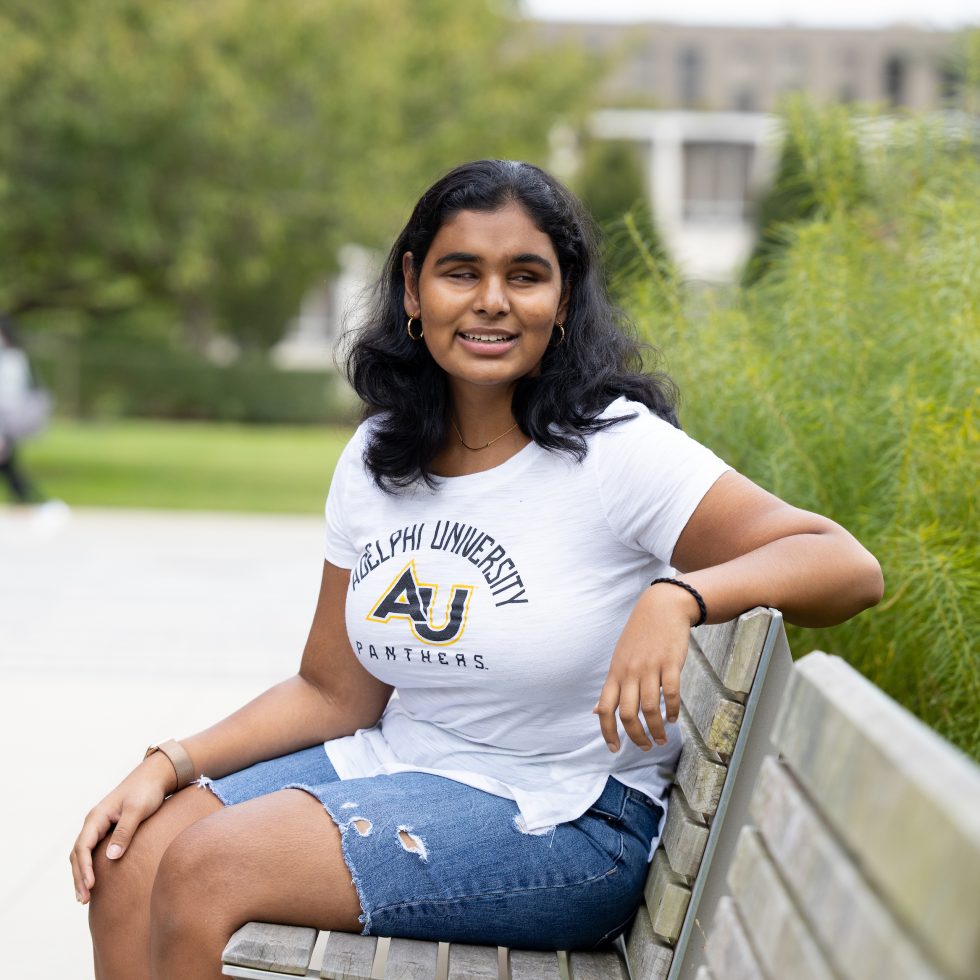
Jessica Karim has demonstrated academic excellence and active pursuit of the values, knowledge and skills of the social work profession
A Dynamic, Diverse Community
Resilient. Persistent. Committed. That description can apply to any Adelphi student in our social work program, but especially to Jessica Karim, who was named the 2021 BSW Student of the Year by the New York state chapter of the National Association of Social Workers. Jessica, who describes herself as a physically disabled woman of color, is a fierce advocate for others with disabilities. She continued on to earn her MSW at Adelphi.

Awarded for Innovation in Social Work
To better serve at-risk children and young adults in underserved communities, Adelphi spearheaded a collaborative project to train social work and nursing graduate students in the interdisciplinary area of behavioral healthcare. They received a $1.92 million federal grant to implement this life-changing social work initiative.
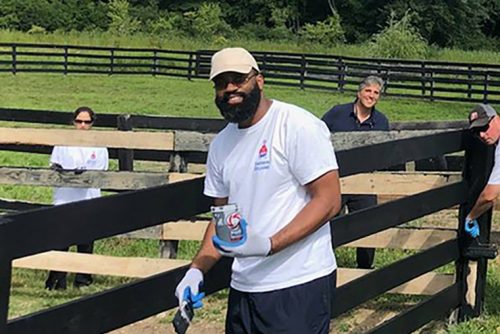
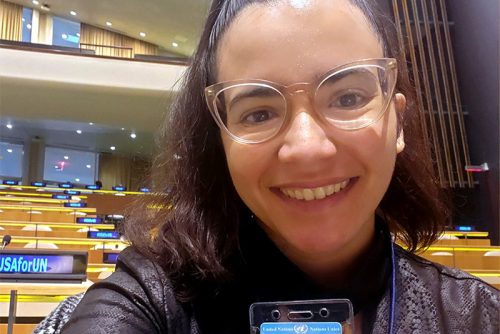
Student Success Stories



Stay Current, Stay Licensed
Upcoming Events


Social Work News
View All Social Work News






Help with Tuition
Awards & Recognition